
Introducing 1cFE
1cFE is a research effort at the Astera Institute exploring a specific question: what must be true for fusion energy to reach a levelized cost of electricity at or below $0.01/kWh?
“The creation of some new technological capability tells us nothing about whether that capability can be achieved cheaply.” - Brian Potter, The Origins of Efficiency (2025)
We are not designing a reactor. We are mapping the design space to identify which corridors, if any, lead to sub-cent economics, what assumptions they depend on, and where the highest-leverage technical risks sit. The approach is frontier backcasting: start from an aggressive cost target and work backward to expose what must be true across physics, engineering, manufacturing, and finance. Project lead Damien Scott wrote about how 1cFE came to be. We are publishing our work here as we go.
What We Are Building
The sub-cent question requires a pipeline that can ingest diverse fusion architectures in a consistent format, propagate uncertainty through the analysis, and solve backward from a cost target to required parameter ranges. Existing tools in the fusion TEA space are valuable, and we use them as references, but they are generally organized around forward estimation of specific concepts. Our pipeline is organized around a different question.
Here is what we are working on:
A formal modeling layer built on SysML v2 with textual notation. This lets us represent fusion design concepts as structured, version-controlled, machine-readable models. We use AI coding tools to accelerate the modeling process, with a multi-level automated verification stack to ensure model quality.
A technoeconomic analysis engine (fusion-tea) that takes formalized concepts and computes capital costs, energy balances, operating costs, and levelized cost of electricity.
A concept taxonomy that maps the fusion design space into a structured set of approach families. This is the “spanning set” that determines which concepts we model and why.
Code is public at github.com/1cFE
What Is Ahead
Our focus areas over the coming months, roughly in order:
Methodology and tooling. How we formalize and verify fusion design concepts. How the TEA pipeline works and how we validate it against existing literature.
The spanning set. Which fusion approaches we are modeling, how we selected them, and what the taxonomy looks like. We want this in front of the community early so people can flag what we are missing.
Physics constraints. How we specify the physics relationships for different fusion approaches and couple them into plant-level economics, so that constraints propagate through the cost model rather than sitting as buried assumptions.
Corridor maps. The core deliverable: for each approach family, what parameter ranges and technology assumptions would be needed to reach sub-$0.01/kWh, and how sensitive the result is to each assumption.
Synthesis. What survived the analysis, what did not, and where the highest-leverage opportunities sit for the field.
Target dates will evolve as the work progresses, but the dependency logic holds: methodology before results, taxonomy before corridors, validation before claims.
Updates posted to 1cf.energy/updates and also available on Substack 1cfe.substack.com. Follow the 1cFE on X @1cfenergy for discussion and shorter updates.
Who is working on this
The 1cFE team is united around contributing to the central question of the initiative: how cheap could fusion energy get, how transformative could that be for civilization, and what must be true to get there? Our backgrounds span plasma physics, aerospace engineering, systems engineering, and deep tech.
Damien Scott, Program Lead
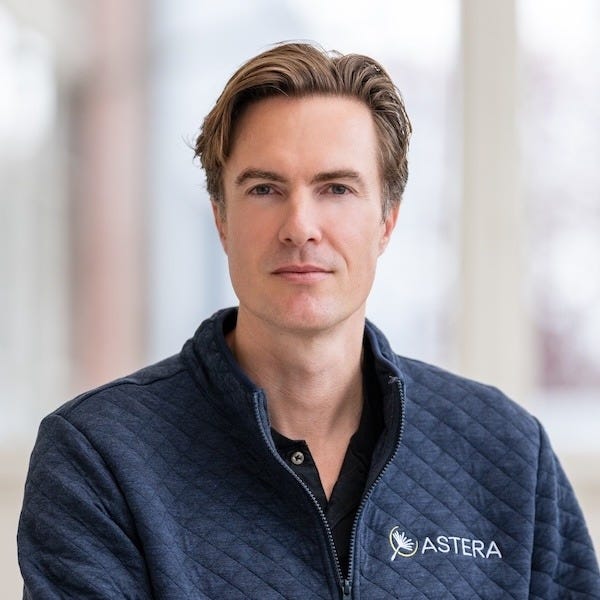
I am a physics-trained deep tech builder from Botswana. I founded Marain, an EV and autonomous fleet simulation and optimization company acquired by General Motors, previously worked in Formula One at Williams, and hold a physics degree from the University of Sydney and MS and MBA degrees from Stanford.
Why I am working on fusion
Almost everything we care about is downstream of available energy, and I want to help humanity produce more of it and climb the Kardashev scale. Almost all usable energy is ultimately from fusion. Energy from the gravitational confinement reactor in the sky is already cheap and getting cheaper, so my central question is whether directly harnessing fusion in terrestrial reactors can be even cheaper, with sub-1¢/kWh as the deliberately extreme stretch target, and what must be true to make it happen.
What I am doing at 1cFE
I set the technical and strategic direction for 1cFE and work hands-on across the stack, from the core techno-economic model and system architecture to engaging external experts who stress-test both the physics and the economics. I am also driving our work on how AI can compress the design, simulation, and engineering loops that have historically bottlenecked fusion progress.
Tal Rubin, Physics Lead
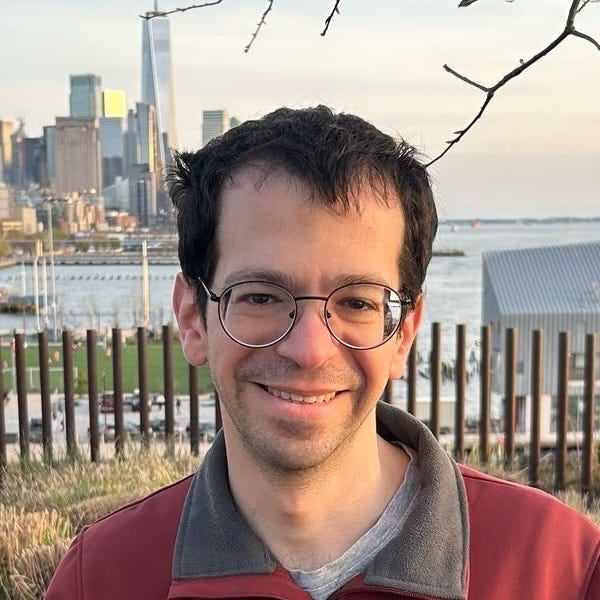
I am a plasma physicist with a background in mechanical engineering. Most recently, I worked on proton-boron 11 fusion, with a focus on using the ponderomotive effect to act on protons and boron ions differentially, enabling selective ion control at the extreme temperatures p-B11 demands. Previously, I worked on aerospace systems, both as an engineer and as an engineering team leader, overseeing mechanical design and material qualifications. I hold a PhD in plasma physics, advised by Nat Fisch at Princeton, and a BSc and an MSc in mechanical engineering from the Technion.
Why I am working on fusion
Fusion is one of the truly unsolved physics and engineering problems which are both solvable in the relatively short term, and with a promise to materially change human lives. Energy is what runs civilization, and better, cheaper energy immediately translates to wealth and longevity.
What I am doing at 1cFE
I am the physics lead in 1cFE, linking costing with the physics underlying the operation of any potential fusion power plant. I do this by mapping the subsystems that must be modeled across different plant designs and fuel types, and accounting for their costs and technical maturity in our model.
Mallory Snowden, Systems Engineering & TEA Lead
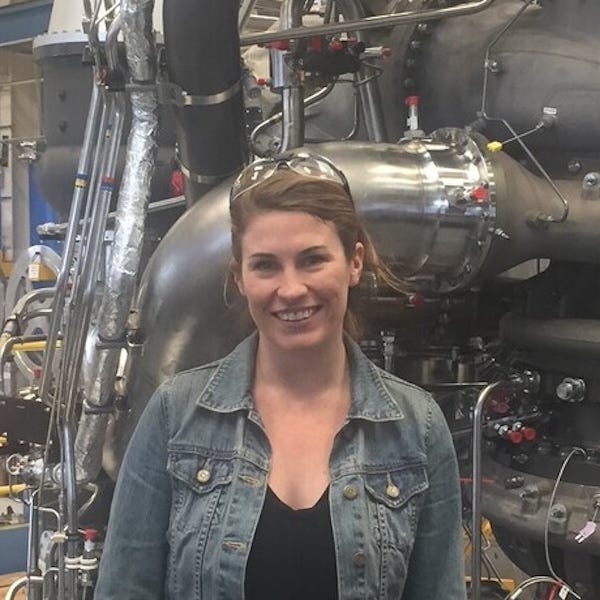
Trained as a Mechanical and Aerospace Engineer, I bring over a decade of experience designing clean-sheet subsystems for both spacecraft and aircraft. Over time, a growing focus on sustainability led me to confront the aerospace industry’s significant carbon footprint. That realization prompted my transition into electric aviation at Joby Aviation and ultimately to pursue a Master’s degree in Renewable Energy Systems at Imperial College London.
Why I am working on fusion
I’m drawn to fusion for the same reason I was drawn to aerospace: the sheer scale of the challenge. It’s an intergenerational goal that demands technical rigor and complex coordination across disciplines and systems. Beyond the engineering, the potential upside is extraordinary. Affordable fusion power could unlock transformative socioeconomic and environmental benefits — from fully decarbonized heating and green hydrogen production to large-scale direct air capture and other energy-intensive climate solutions.
What I am doing at 1cFE
I lead the development and integrity of techno-economic analysis (TEA) models, ensuring correctness, modular decomposition, and validation against reference studies. I also design the uncertainty propagation framework and supporting data visualizations to deliver clear, interpretable, and actionable results.
Reid Westwood, Systems Architect
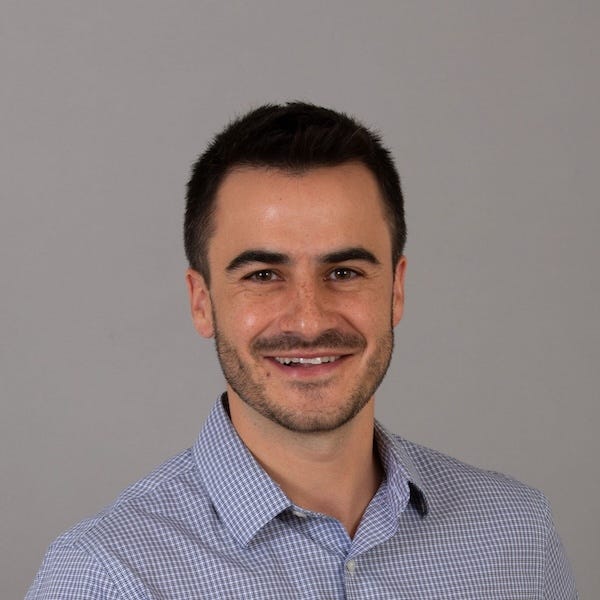
Electrical Engineer (Stanford MS/MBA) who has worked from low level hardware (Intel, ARM) to signal processing, ML, to leading a deep tech startup building autonomous maglev transportation. Most recently, I have been pursuing AI+SciML to accelerate the development of ambitious hardware.
Why I am working on fusion
It is the pinnacle of complexity and impact. I believe that the success of ambitious projects comes down to making a series of good decisions. As complexity rises, so does the difficulty of making smart, informed decisions. I am excited about the opportunity to use AI to help in this regard towards achieving one of the biggest milestones for mankind.
What I am doing at 1cFE
I lead the development of the agentic MBSE tooling for concept modeling, simulation, and exploration/optimization.
Get Involved
1cFE is an open research effort. If you work in fusion, plasma physics, systems engineering, or technoeconomic analysis and see something we are getting wrong or missing, we want to hear from you. The repos are open at github.com/1cFE. Use the tools as we release them, file issues, and tell us what breaks. The work is published as it progresses, and the goal is to produce something the fusion community finds useful, insightful, and actionable.
Reach us at contact@1cfe.energy or through the contact form on our site.